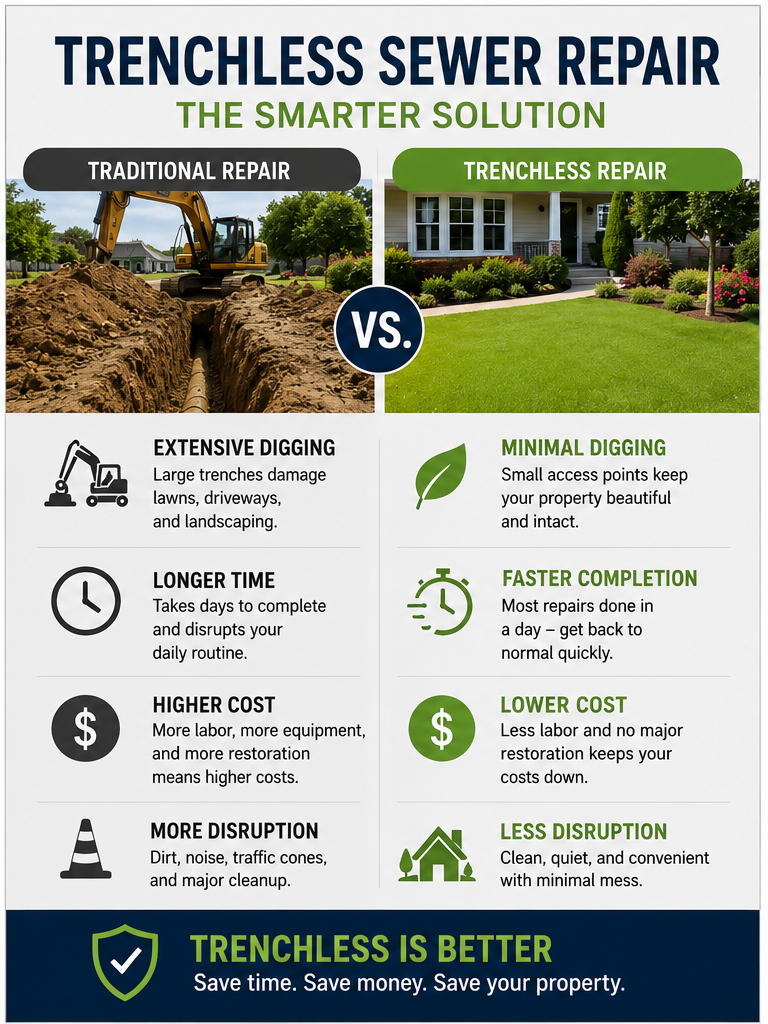
In McCracken County, many homes built before 1970 in neighborhoods like Northside and Downtown Paducah still rely on clay or cast-iron sewer laterals that crack from shifting river soils and tree roots. Cured-in-place pipe lining pulls a felt liner saturated with epoxy resin through the existing pipe, then inflates and cures it with steam or hot water to form a new structural pipe inside the old one. This method works well on straight runs up to 300 feet but requires precise temperature control during humid subtropical summers when ambient heat can shorten working time for the resin.
Paducah's floodwall and riverfront proximity means some laterals sit in high water tables, so crews often pre-inspect with camera before lining to locate offsets or collapses that could block liner passage. In West Paducah and the Paducah Mall area, commercial properties with larger diameter lines need thicker 9-mm liners rated for higher flow. McCracken County code requires a post-lining camera inspection and permit sign-off; skipping this step can delay real-estate closings when buyers request proof of repair.
Hot summers in Paducah accelerate resin cure but also increase the risk of wrinkling if the liner cools unevenly, so experienced crews schedule early-morning pulls. Older Lower Town Arts District homes with narrow easements make traditional excavation impractical, making lining the preferred option when roots have infiltrated joints but the pipe alignment remains intact.
Technician insight
In Paducah, the thing that catches most people out with cured-in-place pipe lining is the high water table near the riverfront and Floodwall Murals; lines stay saturated year-round, so crews must manage moisture carefully or the resin won't bond properly in older clay pipes common in Northside homes.
Collapsed Lateral Near Lower Town
A Northside homeowner noticed slow drains after heavy summer rain. Camera inspection showed a root-intruded clay pipe with a 20-foot collapsed section. We installed a 6-mm epoxy liner through the existing cleanout, cured it overnight, and restored flow without excavation. The county permit was signed off the next day.
Cured-In-Place Pipe Lining Services We Offer
✓Residential Lateral Lining
Restores 4- to 6-inch sewer laterals from Paducah homes to the main without digging yards in Northside or West Paducah.
✓Commercial Drain Lining
Applies structural liners to larger pipes serving businesses near the Paducah Convention Center and Mall area.
✓Root Intrusion Repair
Seals root-damaged sections in McCracken County clay pipes common around older Downtown Paducah properties.
✓Post-Repair Camera Verification
Provides recorded camera inspection after lining to meet local permit requirements for McCracken County homes.
✓Emergency Line Rehabilitation
Deploys same-day lining on collapsed laterals affecting homes near the Paducah Riverfront during heavy rain events.
Cured-In-Place Pipe Lining Cost in Paducah, KY
| Service | Typical Range | What Affects It |
|---|---|---|
| Typical 4-inch residential lateral (50-100 ft) | $2,800–$4,500 | Price moves with depth and number of bends |
| Commercial 6-inch line segment | $4,200–$7,000 | Larger diameter and traffic control add cost |
| Root-damaged section repair only | $1,900–$3,200 | Limited to isolated problem areas |
| Camera inspection and quote | Free | Applies when repair proceeds same week |
Ranges are typical for Paducah, KY and confirmed with an exact written quote before any work starts.
How it works
- 1
Camera Inspection
Technicians run a camera from the cleanout or access point to map the line, note offsets, and confirm suitability for lining in Paducah soil conditions.
- 2
Pipe Cleaning
High-pressure jetting removes roots, scale, and debris so the liner bonds directly to the host pipe walls.
- 3
Liner Installation
The resin-saturated liner is inverted or pulled into place, then cured with steam or hot water to form the new pipe.
- 4
Final Verification
A post-cure camera pass documents the finished liner and satisfies McCracken County inspection requirements.
Pricing
Pricing varies by pipe length, diameter, and access; quotes are provided after camera inspection.